
Hit by an E-Bike or Electric Scooter on a Virginia Sidewalk? Who Pays for Your Injuries?

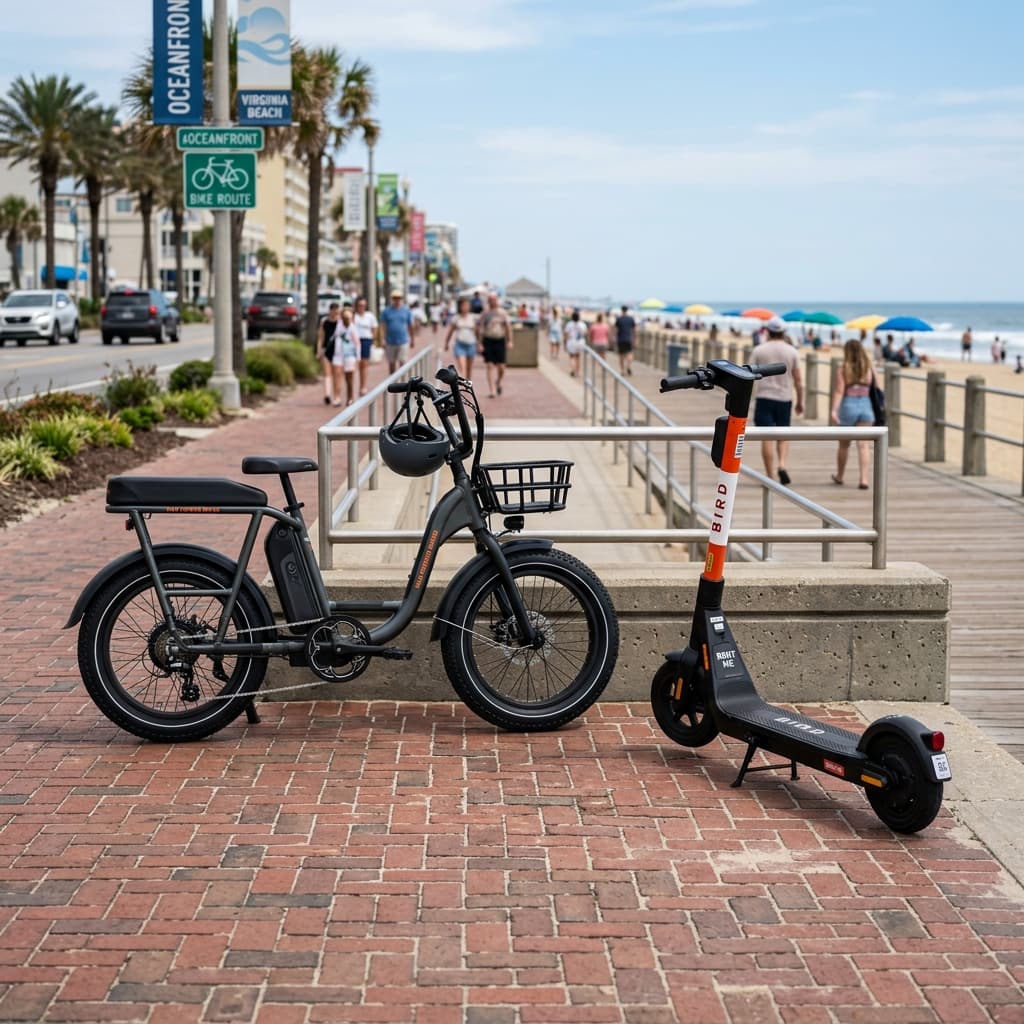
Short answer: The rider operating the e-bike or scooter on the sidewalk is primary liable if they fail to yield right-of-way to pedestrians under Va. Code § 46.2-904. However, securing financial recovery requires navigating significant insurance coverage gaps: auto insurance policies usually deny claims involving unregistered electric micro-mobility vehicles, while homeowners and renters policies often exclude motorized devices capable of exceeding 15-20 mph. A thorough investigation must identify secondary liability, umbrella policies, or app operator coverage.
Walk down Atlantic Avenue at the Virginia Beach Oceanfront, through Downtown Norfolk, or near the ODU campus, and you will see them: Class 2 e-bikes with throttles and dockless electric scooters flying down pedestrian sidewalks at 20 to 25 mph.
When an e-bike or electric scooter strikes a pedestrian, the physical impact can cause traumatic brain injuries, broken bones, and severe spinal trauma. But the legal collision that follows is often even more complex: who actually pays for the victim's medical bills and lost wages?
Virginia Sidewalk Laws: Riders Must Yield to Pedestrians
Under Va. Code § 46.2-904, a person riding an electric power-assisted bicycle or motorized skateboard/scooter on a sidewalk or crosswalk has all the rights and duties of a pedestrian. However, the statute explicitly commands that riders MUST yield the right-of-way to any pedestrian on the sidewalk.
Furthermore, Virginia municipalities have specific local restrictions. For example, Virginia Beach local ordinances strictly regulate motorized device operation on the Boardwalk and crowded pedestrian paths. A rider traveling at unsafe speeds on a crowded sidewalk is operating negligently under Virginia law.
The Insurance Gap Trap in E-Bike & Scooter Accidents
The biggest hurdle in an e-bike or scooter accident is finding applicable insurance coverage. Unlike car crashes where standard auto liability policies respond, micro-mobility vehicles trigger major policy exclusions:
1. Car Insurance Exclusions: Motor vehicle liability policies typically cover 'motor vehicles' designed for highway travel, routinely denying coverage for sidewalk e-bike or scooter crashes.
2. Homeowners & Renters Exclusions: While personal liability under a homeowner's policy sometimes covers bicycle accidents, many insurers enforce strict motorized vehicle exclusions for devices that exceed 15-20 mph or have motor wattage above specified thresholds.
3. App Operator Waivers: App-based rental companies (like Lime or Bird) require riders to agree to user terms that shift all legal liability directly onto the individual rider.
Virginia Contributory Negligence and Sidewalk Crashes
Because Virginia enforces pure contributory negligence-see the pure contributory negligence rule post-insurance defense adjusters will try to blame the pedestrian. They will argue you 'stepped out suddenly' or were 'distracted by your phone' to try and bar you from receiving 100% of your compensation.
Overcoming this defense requires securing video surveillance from nearby Oceanfront or commercial businesses, gathering eyewitness testimony, and documenting skid marks and impact points immediately after the crash.
What to Do If You Are Hit by an E-Bike or Scooter
If you or a family member is struck by an e-bike or scooter rider in Hampton Roads, take these critical steps:
• Call the police immediately to obtain an official incident report.
• Take photos of the e-bike or scooter, including serial numbers or QR codes if it is a rental app device.
• Get the rider's full contact info, phone number, and driver's license details.
• Seek immediate medical evaluation, even if you think your injuries are mild.
Virginia's statute of limitations for personal injury is two years under Va. Code § 8.01-243. Talk to a Virginia Beach personal injury attorney early to uncover all available insurance policies before evidence vanishes.

Scott is a Virginia Beach personal injury attorney with 20+ years representing accident victims across Hampton Roads. He handles every case personally, on a no-win, no-fee basis.
This article is general information about Virginia law, not legal advice, and does not create an attorney-client relationship. Deadlines and exceptions depend on your specific facts, consult a licensed attorney about your situation.